How to Use a Drum Carder: A Step-by-Step Guide for Beginners
From clamping the carder down to lifting off your first lofty batt, here is the simple process for carding wool on a drum carder, plus the most common beginner mistakes and how to avoid them.
The Workshop Team
Wool Drum Carder · November 13, 2026
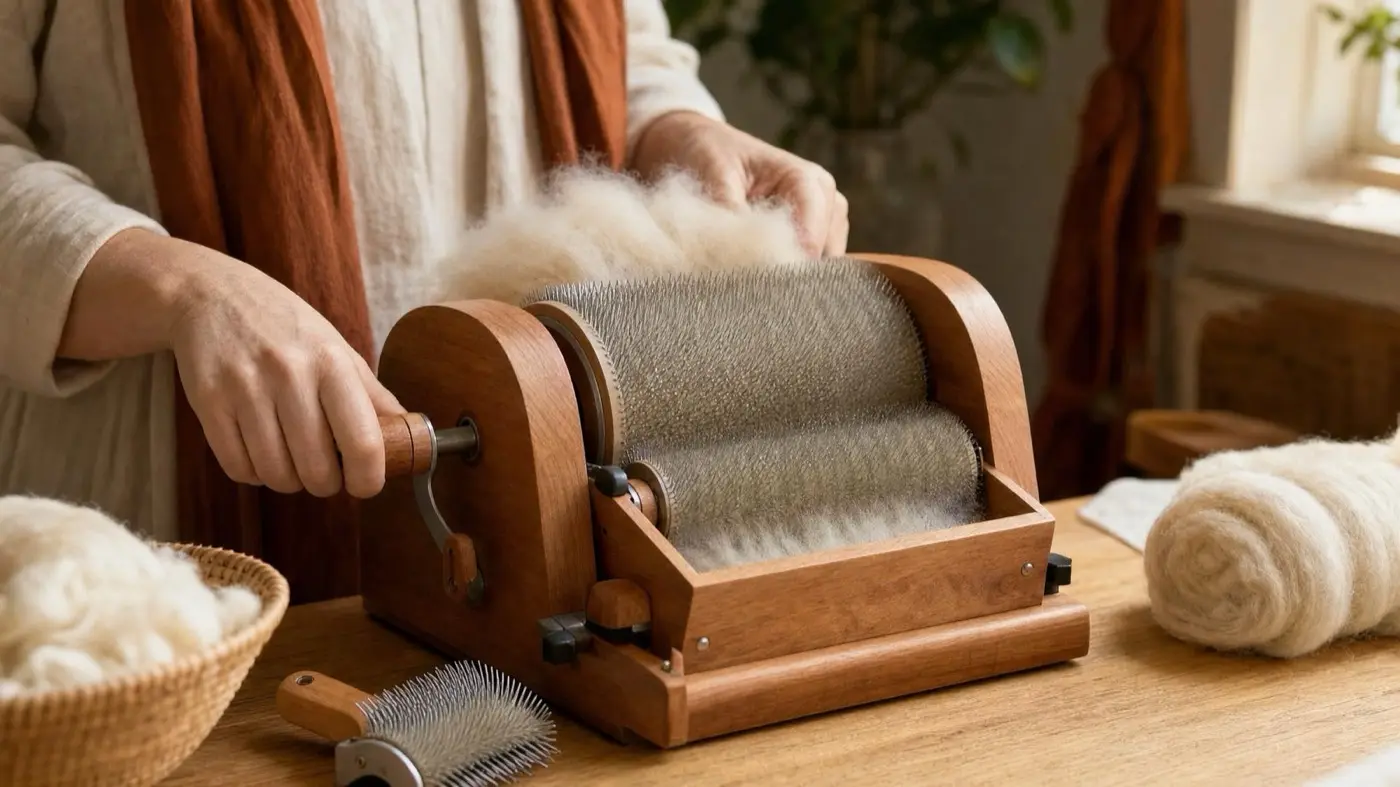
Hands feeding washed wool onto the infeed tray of a wooden drum carder
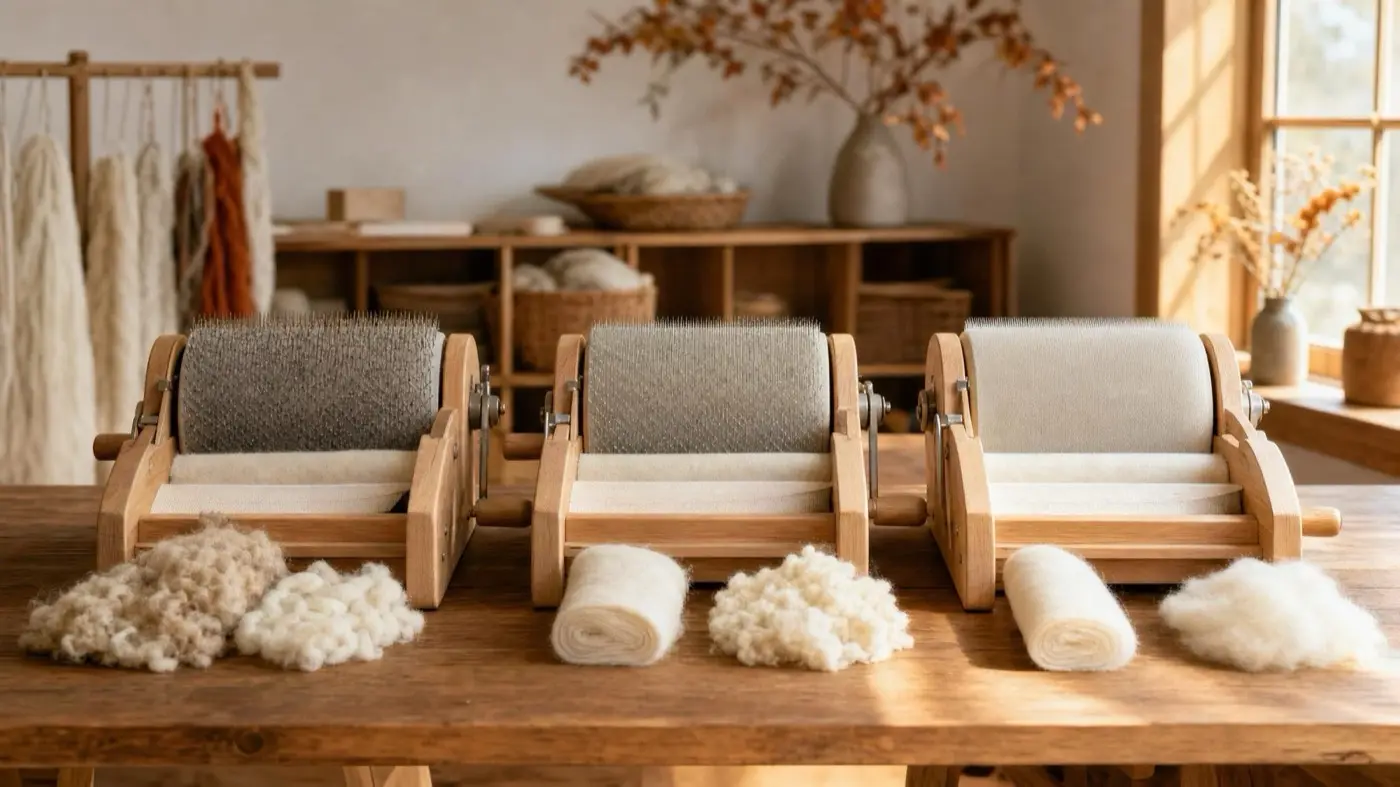
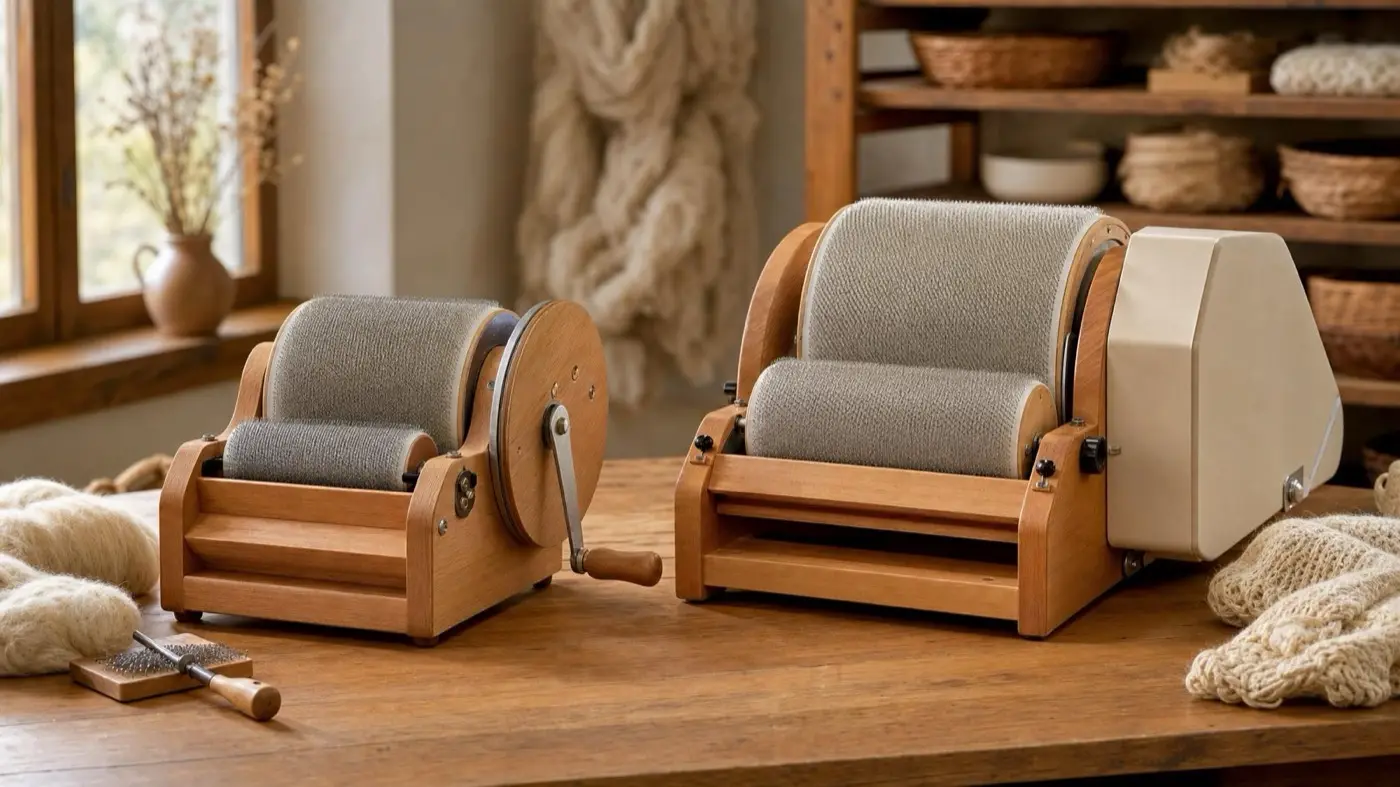
A drum carder turns clean, opened fiber into a batt: a soft, airy sheet of fiber that is ready to spin or felt. The machine does most of the work, but a few habits make the difference between a smooth, even batt and a tangled one. Here is the process we teach every new owner.
1. Set up and prepare the fiber
Clamp the carder firmly to a sturdy table so it cannot move while you crank. Check that the drums turn freely and that the belt or chain is properly tensioned.
Start with clean, fully dry fiber. Open up the locks by hand or with a flick carder, and pick out any vegetable matter, second cuts and short bits. The more open the fiber is before carding, the better the batt will be.
2. Feed small amounts slowly
Lay a thin, wispy layer of fiber on the infeed tray and turn the crank slowly, letting the small licker-in drum pull the fiber in. The licker-in passes the fiber to the large main drum, where it is combed and aligned.
Feed less than you think you need. Thick clumps tend to wrap around the licker-in instead of transferring to the main drum. If fiber starts collecting on the licker-in, stop, pull it off, and feed thinner layers.
“Thin, even layers make better batts. Overfeeding is the most common beginner mistake.”
3. Fill the drum, but don't overload it
Keep feeding until the teeth on the main drum are just covered with fiber. A packer or burnishing brush can press the fiber down into the cloth so the drum holds more, but on a first batt it is better to stop early.
If you are blending colors or fibers, feed them in thin alternating layers so they mix evenly.
4. Remove the batt
Turn the main drum until the doffing strip (the gap in the cloth) is at the top. Slide the doffer or batt picker under the fiber at the strip and gently lift, separating the batt across the width of the drum.
Then turn the drum slowly backwards while you peel the batt away. Take your time: pulling too hard stretches the batt unevenly.
5. Card again for a smoother batt
One pass gives a textured, rustic batt. For smoother, more uniform fiber, split the batt lengthwise into strips, draft each strip slightly, and card it again. Two or three passes produce very even batts for fine, consistent yarn.
When you are finished, clean the cloth with the brush supplied with your carder and remove any fiber that has wrapped around the axles. A clean carder makes cleaner batts next time.
Key Takeaways
- Start with clean, dry, well-opened fiber.
- Feed thin layers slowly; fiber wrapping the licker-in means you are feeding too much.
- Use the doffing strip and turn the drum backwards to lift the batt off gently.
- Split and re-card batts two or three times for smoother, more blended fiber.
The Workshop Team
· Wool Drum CarderThe people who design, build and test every Wool Drum Carder in our workshop, sharing what we have learned from years of carding wool, alpaca and everything in between.